
About Wim Claessen, by Peter Fransman
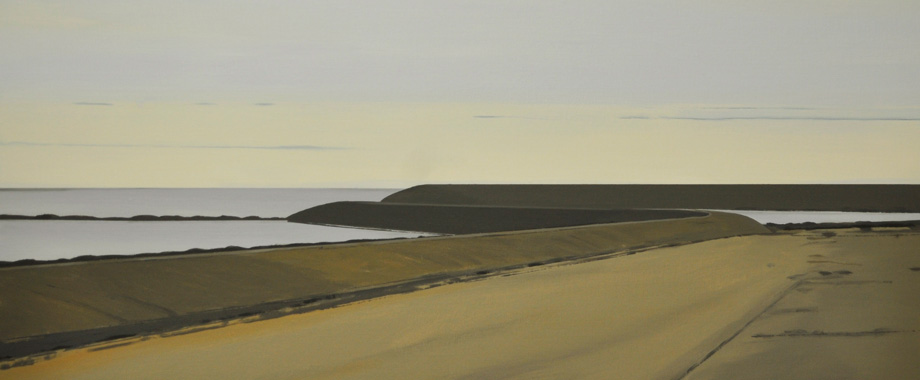
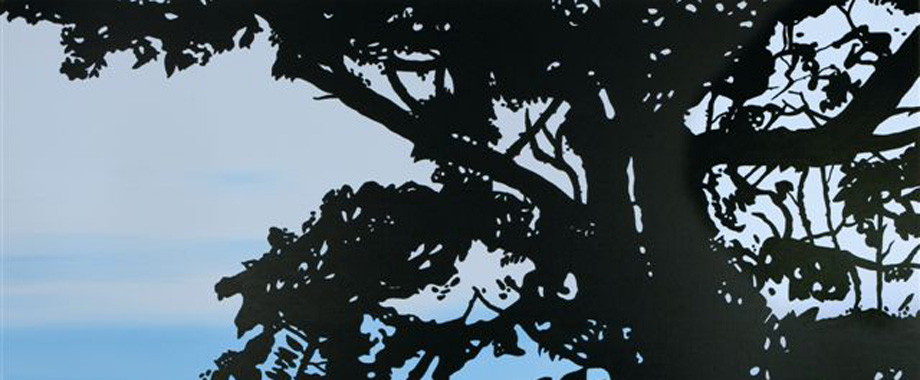
When you look at the work of Wim Claessen at first glance you see landscapes which have an atmosphere of their own and are unique because of their remarkable use of light and colour. The paintings can have a strange effect because of that, but this strangeness is also caused by the stillness of the work. There is something mystical about the work which is not easy to determine. The paintings seem detached, but still the emotion of the artist can be found in them. On the one hand because of the very deliberate painting technique, on the other hand because here is an artist who remains true to himself. True to his contemplative mind and to the omission of unnecessary details. The artist does not say things that need not be said with regard to the various aspects of his work. Yet, neither in his work nor in his conversation is he a ‘taciturn’ man. In his paintings only the essential elements are present. They are there because the composition requires their presence.
There is a direct balance noticeable in the paintings; a subtle balance that goes beyond the images, namely the use of colour and light. There is a kind of harmony, which again, strange as it may sound, is disturbed in a harmonious way. In this way the paintings achieve several layers of significance, which is characteristic of Wim Claessen’s work on canvas and paper.
Through his work the artist wants to touch the viewer emotionally. Not in a hard and confrontational way, but subtly and just to the extent of the viewer’s willingness to be touched. In this way the work achieves a universal layered effect which appeals to the viewer but also urges him to closer observation and is a stimulus to his imagination.
The universal element becomes apparent in the fact that everyone who is confronted with the work recognizes something personal in it. It seems as though your own memories are hidden in the work. This may be related to the fact that the artist uses existing pictures and photos as his basis. Elements of the pictorial culture which is all around us. He does not use those
Images to copy them but to take a motive or several elements out of them and to create something new: his own visual image.
The artist does not use the classical rules for portraying something. You can for example find shade in his work without a visible source of light. This helps to create in our perception a touch of transparent, almost milky light. Together with the stillness of the work this element increases its timelessness. They seem frozen worlds in which no sound is to be heard and matters appear to be almost frozen in time.
Everything is carefully arranged and nothing is left to chance. Thus the artist achieves what he wants, namely that the viewer should not just look, but really see.
And that perhaps is the mystique of Wim Claessen’s work.
Peter Fransman ( Translation: Addy Doljé)
Over Wim Claessen, door Peter
Fransman
Wie op het eerste gezicht kijkt naar het werk van Wim Claessen, ziet landschappen
die een eigen sfeer kennen en die bijna ongekend zijn door het bijzondere
licht- en kleurgebruik. De werken kunnen daardoor bevreemdend aandoen, maar
ook zit die bevreemding in de verstildheid van het geheel. Het heeft iets
mystieks dat zich niet makkelijk laat benoemen.
Op het oog afstandelijke werken waar toch de emotie van de kunstenaar in terug
te vinden is. Enerzijds door de zeer afgewogen schildertechniek, anderzijds
door het feit dat hij dicht bij zich zelf blijft. Dicht bij zijn contemplatieve
geest en dicht bij het weglaten van wat niet nodig is.
Dingen die niet nodig zijn om gezegd te worden laat hij achterwege in de verschillende
elementen van zijn werk Hij is zowel beeldend als sprekend geen “zwijgzaam”
mens. In zijn werk zijn alleen wezenlijke elementen aanwezig. Ze zijn er omdat
de compositie dat vraagt. Een directe balans is merkbaar in de schilderijen
een subtiel evenwicht dat verder gaat dan de beeldelementen, n.l. het kleurgebruik
en het licht.
Er is sprake van harmonie die op haar beurt, hoe vreemd het ook mag klinken,
weer op een harmonische wijze verstoord wordt. Daardoor krijgt het werk een
gelaagdheid die zeer eigen is voor de schilderijen en de werken op papier
van Wim Claessen. Hij wil bereiken dat het werk de emotie van de beschouwer
raakt. Niet hard en confronterend, maar subtiel en net zover als de beschouwer
dat toe laat. Daardoor krijgt het werk een universele gelaagdheid die bekoort
maar ook aanzet tot nadere beschouwing en stimuleert om de fantasie zijn gang
te laten gaan.
Het universele zit in het feit dat iedereen die geconfronteerd wordt met het
werk er iets in herkent dat van hem zelf is, alsof je eigen herinneringen
besloten liggen in het werk. Dit heeft misschien te maken met het feit dat
bestaande beelden en foto’s als basis gebruikt worden. Elementen uit
de beeldcultuur die wij om ons heen hebben. Beelden die hij niet gebruikt
om ze zomaar over te schilderen, maar juist om er een motief of meerdere elementen
uit te nemen en daar iets nieuws mee te componeren en er een eigen beeldelement
van te maken. Daarbij niet gebruikmakend van de klassieke regel om iets weer
te geven. Zo is er schaduw in het werk te vinden zonder dat er een lichtbron
waar te nemen is.
Dit helpt mee om in onze perceptie een zweem van transparant bijna melkachtig
licht te verkrijgen. Dit element versterkt samen met de verstilling de tijdloosheid
in het werk. Het lijken bevroren werelden waarin geen geluid valt waar te
nemen en ze bijna bevroren lijken te zijn in de tijd. Waar alles zorgvuldig
gecomponeerd is en niets aan het toeval overgelaten is. Waarmee hij bereikt
wat hij wil, n.l. dat de beschouwer niet kijkt, maar ziet. En dat is misschien
de mystiek in het werk van Wim Claessen.
Peter Fransman